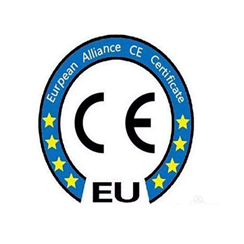
The "CE" mark is a safety certification mark and is regarded as a passport for manufacturers to open and enter the European market. CE stands for CONFORMITE EUROPEENNE. All products affixed with the "CE" mark can be sold in the EU member states without having to meet the requirements of each member state, thus realizing the free circulation of goods within the EU member states.
EU Battery CE Directive:
On May 2, 2006, the European Union passed the draft of the new battery directive No. 98. On September 6 of the same year, the new battery directive 2006/66/EC came into effect, and the original battery directive (91/157/EEC) and Its revised provisions (98/101/EC and 93/86/EEC). Member states must convert the new battery directives into national laws before September 26, 2008.
1. The purpose of the battery CE certification directive
The directive aims to reduce the production of hazardous batteries and accumulators, increase the rate of recovery, treatment and recycling of used batteries and accumulators, and increase the amount of waste collected and recycled from batteries and accumulators.
2. The scope of products covered by the CE directive
The directive covers all types of batteries (except for batteries used in security and military equipment of member states, and batteries used in space). Compared with the directive 91/157/EEC which only applies to old batteries containing certain cadmium, mercury and lead, the scope has been expanded.
3. Contents of CE Directive
(1) The mercury content in batteries is prohibited to exceed 0.0005% (except button batteries with mercury content over 2%); the cadmium content in portable batteries and accumulators is prohibited to exceed 0.002% (except batteries for alarm systems, medical equipment and cordless power tools).
(2) All used batteries on the market need to be recycled. The recycling rate in September 2012 should be at least 25%, and the recycling rate in September 2016 should be at least 45%.
(3) The recycling rate of batteries should meet the following goals in 2011: lead-acid batteries and storage batteries at least 65%, nickel-cadmium batteries and storage batteries at least 75%, and other batteries and storage batteries at least 50%.
(4) The end user needs to be notified in the following ways:
Through promotional materials, inform the potential impact of substances in batteries or accumulators on the environment and the human body, and the collection and recycling methods of waste batteries when they are disposed of;
Be informed directly at the point of sale;
The visual marking on the battery should cover the following information: recycling mark, battery or accumulator capacity, chemical symbols Hg, Cd and Pb (if mercury, cadmium and lead content exceed 0.0005%, 0.002% and 0.004% respectively).
(5) Battery manufacturers (including every manufacturer that sells batteries on the market of a member country) must bear the cost of recycling and disposal. If a battery is installed in an electrical or electronic product, the manufacturer is also regarded as a "battery manufacturer". Battery manufacturers must register in the EU member states where they sell batteries.
4. Revision of the battery CE directive
Directive 2008/12/EC (issued on March 11, 2008): This directive amends the authority of the committee involved in the new battery directive 2006/66/EC;
Directive 2008/103/EC (issued on November 19, 2008): This directive revised the new battery directive 2006/66/EC on the sale of batteries and accumulators;
The committee decided 2008/763/EC: to establish a general calculation method for the sales of portable batteries and accumulators for end users.
The committee decided 2009/603/EC on the registration requirements for manufacturers.
The committee decided 2009/851/EC to establish a questionnaire report on the implementation of the battery directive 2006/66/EC by member states.
5. Committee Decision 2009/603/EC
The Commission Decision 2009/603/EC provides for the registration requirements of manufacturers. There are 6 clauses and 5 aspects of content, namely: registration requirements, information that manufacturers need to provide, registration fees, exchange of registration data, and cancellation of registration.
(1) Registration requirements
Manufacturers only need to register when they first put on the EU market, and return a registration number after registration.
(2) Information to be provided by the manufacturer
Manufacturer name and brand name;
Manufacturer address: zip code and address, street name and house number, country, URL, telephone number, contact person, fax number, email (if any);
How the manufacturer meets its obligations: personal or collection scheme;
Application registration data;
The manufacturer’s identification code, including the EU tax number or the tax number of the country where the manufacturer is located;
Provide a statement of the authenticity of the data.
(3) Registration fee
The fees charged for registration are based on cost and corresponding proportions.
(4) Exchange of registration data
Member states need to guarantee the exchange of data provided by manufacturers, and manufacturers also need to guarantee the exchange of relevant registration data within one month.
(5) Deregistration
If the product is no longer exported to the EU, it can withdraw the relevant registration.
ZRLK has focused on testing and certification of batteries and peripheral consumer products for 15 years, always paying attention to changes in national regulations, and providing customers with one-stop certification services in multiple countries and regions to ensure that your products quickly enter the target market. If you need to apply for CE certification or want to know more related information, you can call ZRLK to inquire about related services.